Abstract

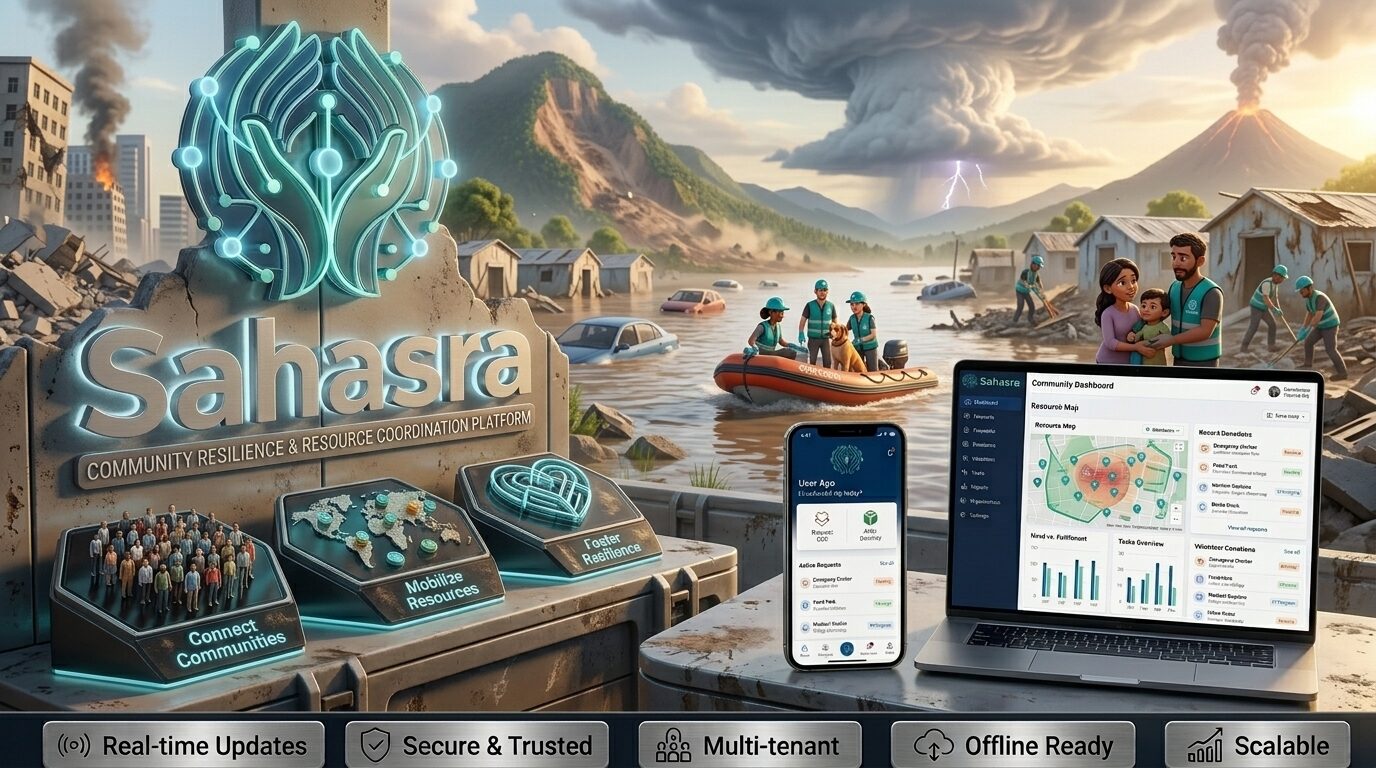
Resource Coordination Platform (RCP) is a fully improved disaster relief ecosystem that has a web based dashboard for the administrators and a mobile app based on React Native for the volunteers and victims of the disaster. The platform is designed for use by community organizations, NGOs and emergency responders. It helps manage the disaster by tracking the inventory, verifying emergency requests and providing assistance to the victims in real time. The mobile app acts as an important tool as it enables the volunteers to view navigation maps, alert about the critical conditions and update the status of their tasks even in disconnected disaster zones.

The problem

In cases of disasters in any particular area, efforts to help victims can become very chaotic. The organization depends on pens, papers, or chat apps to coordinate the rescue mission and supplies, which causes essential information to be lost. Even worse, when one gets into the field, everything becomes even more difficult. Victims will have no easy way of making requests for assistance or identifying safe zones. Likewise, volunteers will be unable to get specific instructions on where to operate and to identify hazards such as blocked roads. Disasters also tend to knock out internet connectivity, leading to poor communication. That is the reason why a mobile app in disaster management is urgently required.

The solution

We created the Resource Coordination Platform (RCP) to bring everyone together during a catastrophe. For the organizers, we have developed a web dashboard for managing rescue units and controlling the inventory. We have created an intelligent mobile application for victims and volunteers. Victims can request for assistance and locate safety zones through a live map. Volunteers get assigned with specific duties, GPS navigation, and a quick tool to notify roadblocks. The app operates offline since there is no connectivity in disaster areas, but it auto syncs all the information as soon as the internet connection is restored. In the background, we have leveraged up to date technologies such as FastAPI and Go to decouple our system into smaller, speedy parts.

In detail

The RCP was developed as a comprehensive SaaS platform that allows several different relief organizations to operate independently on the same platform without any confusion among their operations. This was achieved by splitting the entire project into two major parts: one, the web portal for the admins from the office, and two, the highly efficient mobile application for the victims of the crisis. The mobile application was developed using the React Native technology and was designed for two different types of users: victims and volunteers. Victims of the crisis can use the app to ask for urgent assistance, get emergency notifications, and access the real-time maps to find safe zones. In contrast, volunteers use the app to receive assignments for rescuing the victims, get real-time navigation to the victims' locations, and notify the head office of any field obstacles such as flooding or roadblocks.

One of the major problems in case of a disaster is the damage of cell towers and lack of internet connection. In order to solve this problem, our mobile application was built as "offline-first" where volunteers and victims would be able to access cached data, complete tasks or submit help requests offline with no internet connection whatsoever. All of the data will be stored safely on the phone and once there is an internet connection available, the app will immediately synchronize everything with the headquarters. Under the hood, the backend engine that enables all this functionality was developed using latest programming languages like Python (FastAPI) and Go. We did not build one monolithic application but divided the backend infrastructure into small and separate microservices dealing with particular tasks such as user authentication, inventory management in the warehouse or updating live maps.

To link up the web admins and the mobile volunteers without a hitch, we leveraged a lightning fast event-driven system architecture. Any time an admin sends a task from the web interface, the task information will be relayed to our messaging system known as RabbitMQ instantaneously. The live-sync service we developed pushes the message immediately to the volunteer’s smartphone within milliseconds using the WebSockets technology. In addition, we incorporated a fail-safe system known as “Transactional outbox” which ensures that any life-critical message will never be lost in case of a server crash.
Screenshots

Add Inventory
Add Inventory
Categories
Categories
Diclear A Disaster Event
Disaster Events
Disaster Events

Related projects

Mobile applications

Project_24

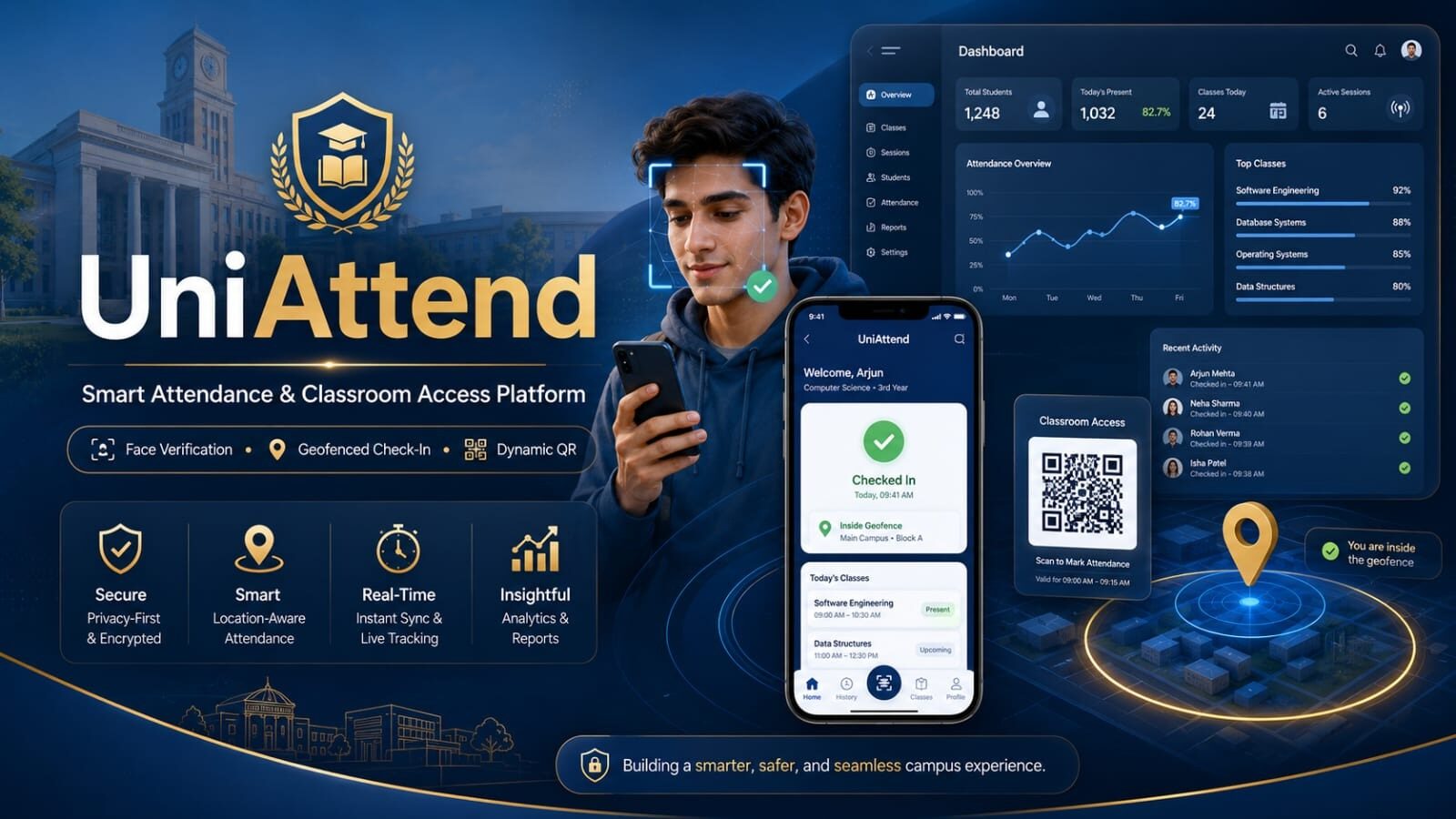
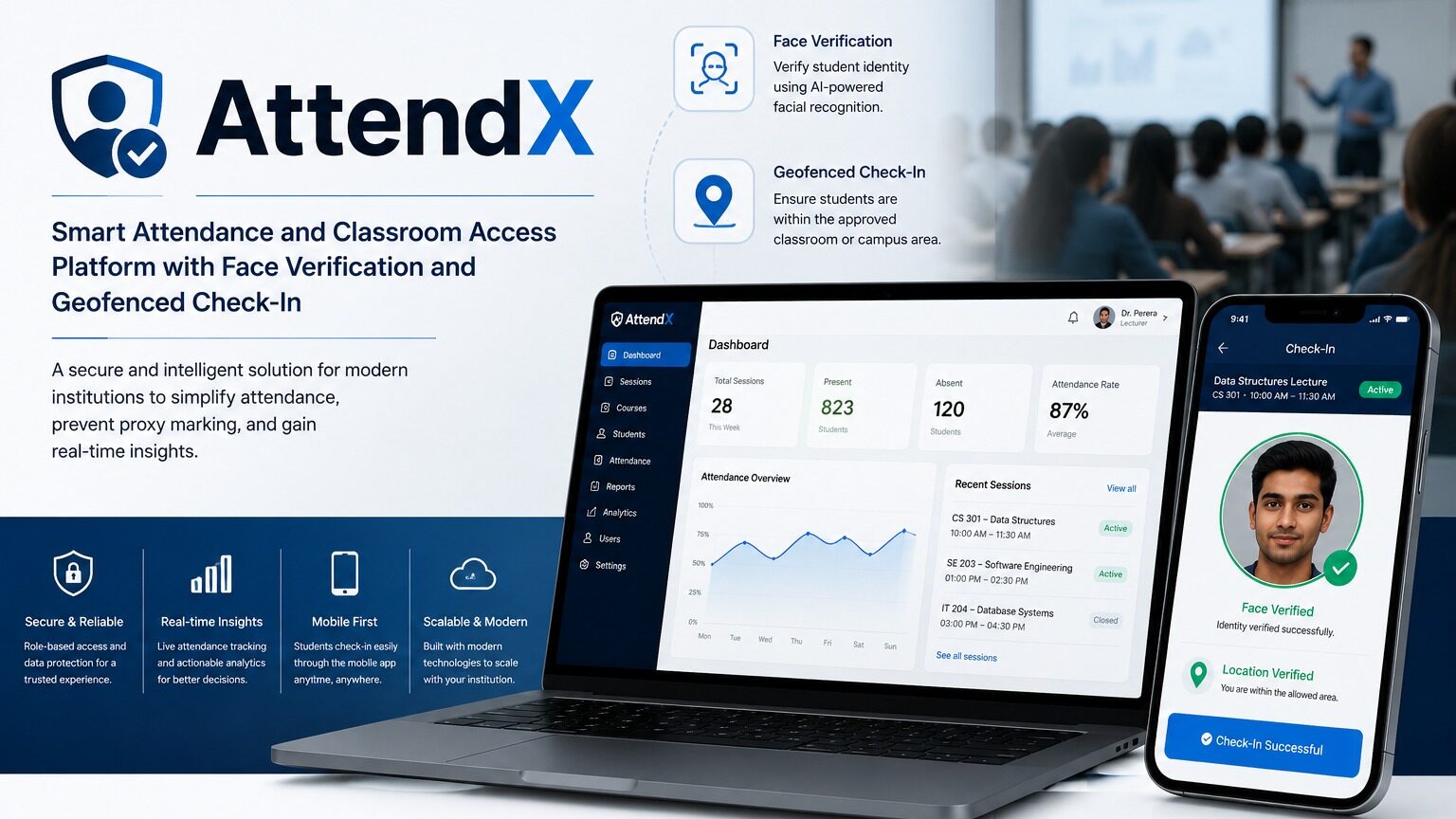
Face-verified, geofenced lecture attendance that makes proxy attendance nearly impossible

150 2026
Mobile applications

EcoTrack

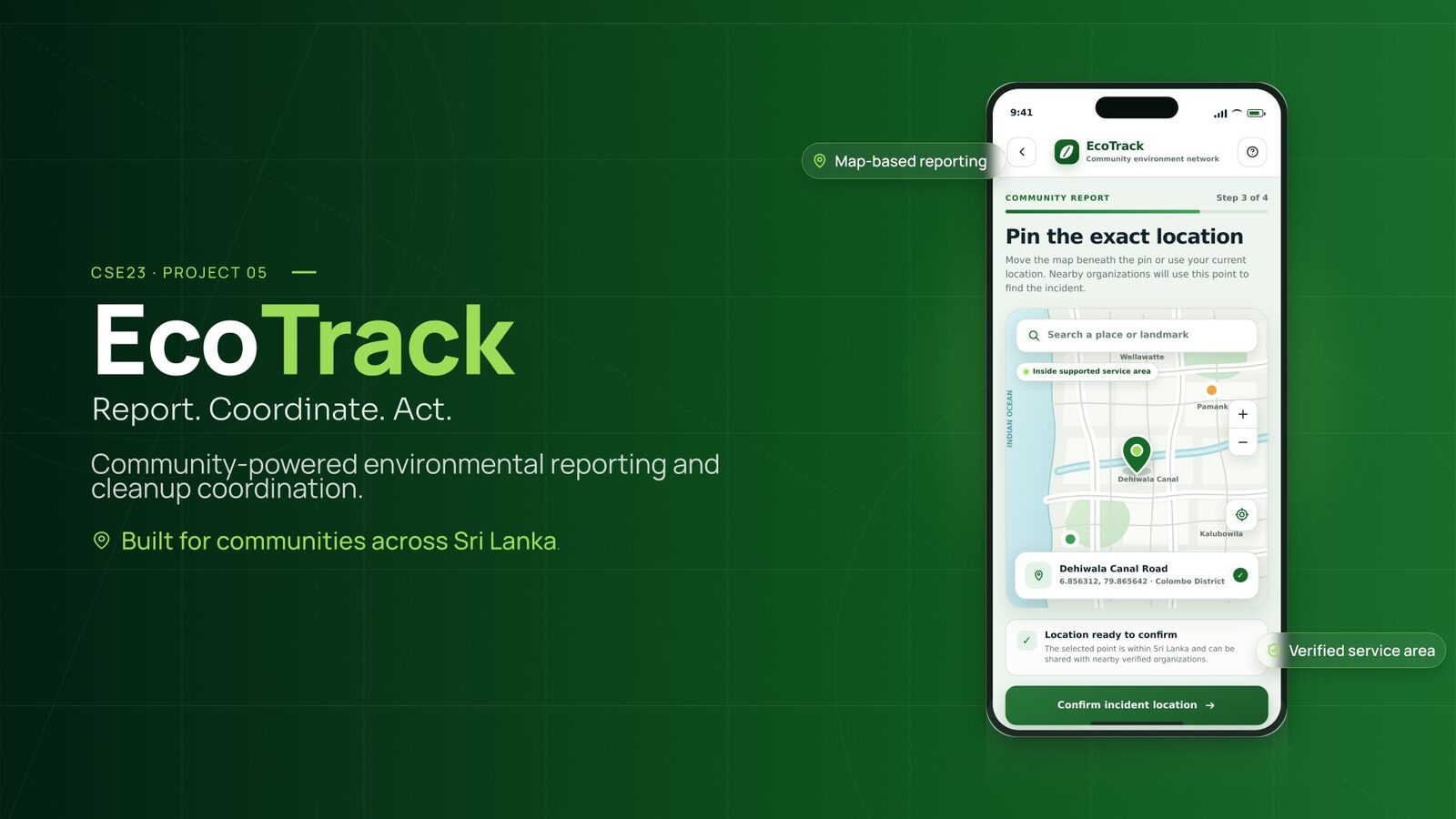
Scalable Multi-Tenant SaaS Platform for Community-Driven Environmental Monitoring and Cleanup Coordination

116 2023