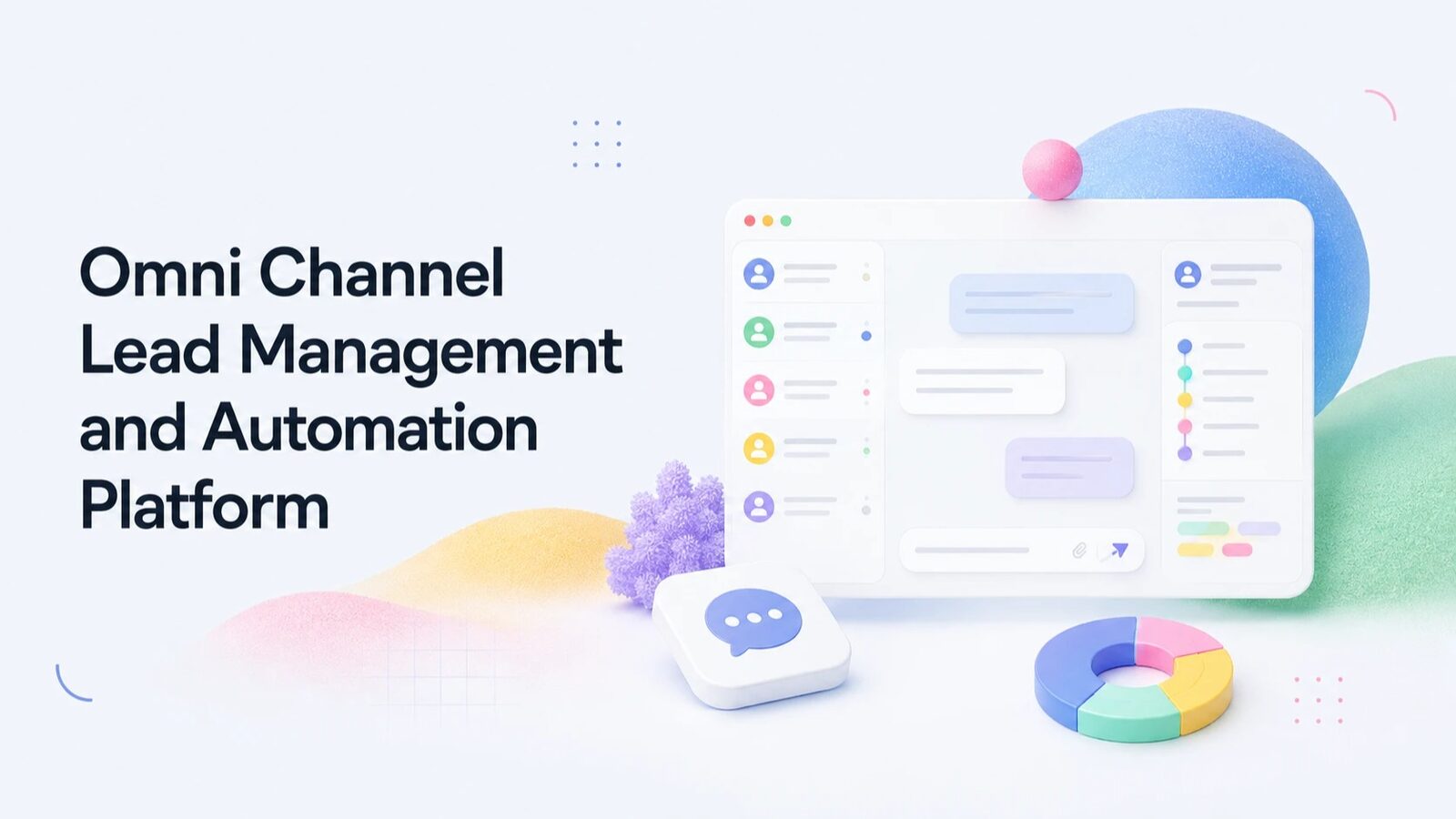
Omnichannel Lead Management Platform
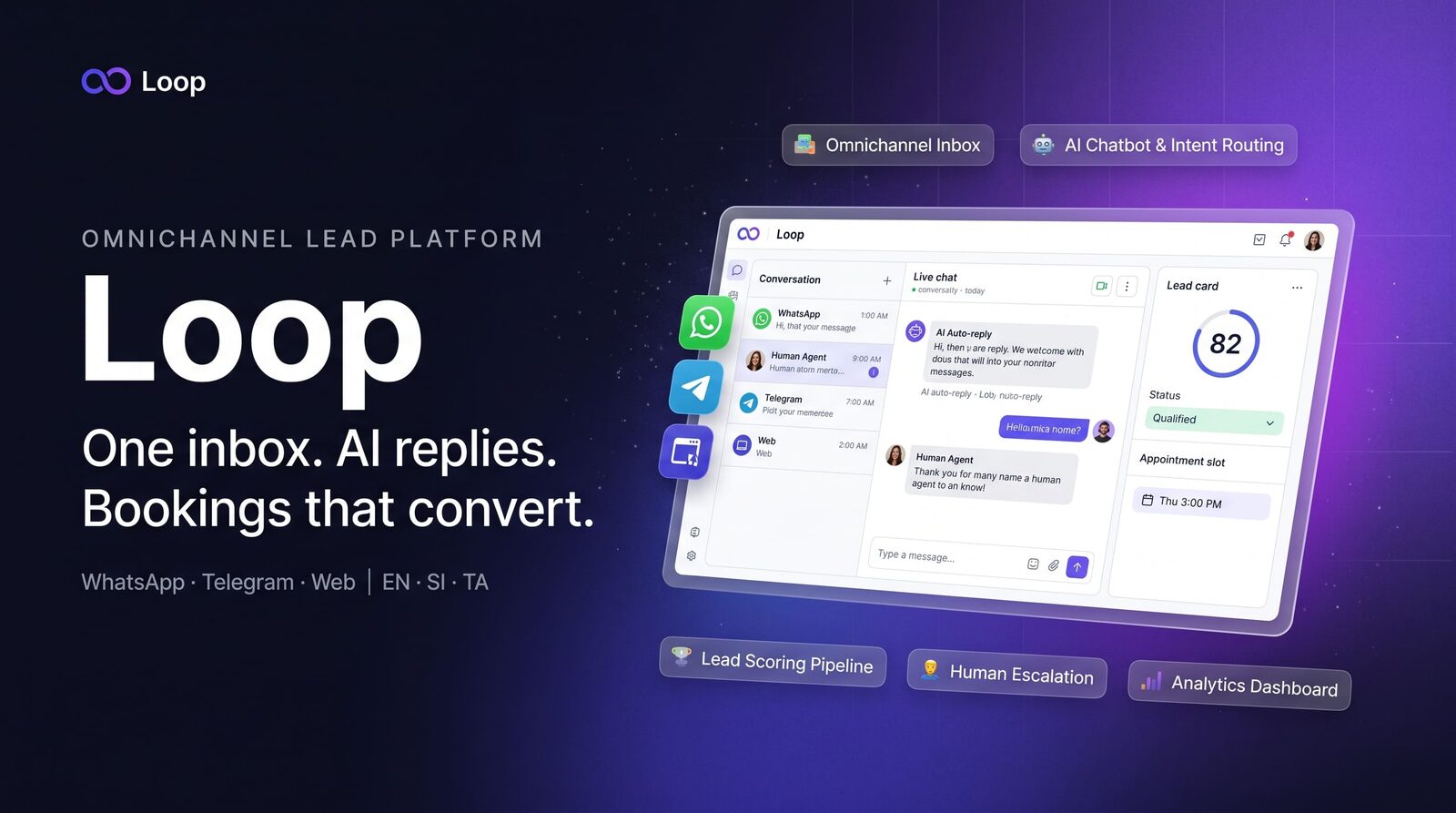
A multi-channel messaging platform that automates customer answers and manages sales leads.
Unify WhatsApp, Telegram and web chat into one AI-routed inbox for small businesses.
Small service businesses lose customers because WhatsApp, Telegram and website chats live in separate apps, with no replies after hours and no way to track who converted. This SaaS platform puts every inquiry into one inbox, classifies intent with Gemini, answers FAQs and bookings through a configurable chatbot, and hands the chat to a human when needed. Staff work a scored lead pipeline, book appointments, and reply on the customer’s original channel from a real-time Vue dashboard. Built as multi-tenant microservices (Bun, Elysia, PostgreSQL, Docker) for salons, tutors and similar vendors who cannot afford enterprise CRM.
Small service businesses salons, photographers, tutors, home-service vendors take inquiries on WhatsApp, Telegram and their website at once. Those channels do not share an inbox, so messages are missed or answered late. There is no lead record, no scoring, and no follow-up trail. After closing time nobody replies, so the customer books elsewhere. Enterprise CRM and chatbot products exist, but they are expensive, heavy to configure, and aimed at sales teams rather than a shop with a few staff.
One multi-tenant platform that receives WhatsApp, Telegram and web-widget messages, normalises them, and routes by AI intent. A no code FAQ and sector chatbot answers common questions 24×7, including Sinhala, Tamil and English, plus voice notes and photos. Anything the bot cannot handle is queued for an agent, who claims the chat and replies on the same channel. Every contact becomes a scored lead with a lifecycle. appointments can be booked from chat or the dashboard, with reminders. Analytics stay on the server so staff see volume, conversion and channel mix without exporting spreadsheets.
The Omnichannel Lead Management Platform built for small service vendors who already live on messaging apps but have no CRM.
Customers write on WhatsApp, Telegram or an embedded web widget. A messaging gateway accepts the webhook, maps each platform into one internal message shape, stores history, and detects language (English, Sinhala, Tamil). Voice notes are transcribed and photos are described with Gemini so the rest of the pipeline can treat them as text.
A routing service classifies intent (greeting, FAQ, booking, qualification, human request) and sends the message to the right handler. The chatbot tries the owner’s FAQ list first, then a scripted flow for that business sector (salon, tutoring, photography). If the customer asks for a person, or the bot cannot help, the conversation is escalated. Connected agents see the queue over WebSocket, claim a chat so only one person replies, and release it when the AI should take over again.
Leads are created from conversations or by hand, given a transparent rule-based score, and moved through new → contacted → qualified → converted / lost, with an append-only activity log. Appointments are booked in natural language or from the dashboard, with opening-hours checks, conflict detection, alternative slots, and 24-hour / 1-hour reminders.
Owners register a business, connect their own Telegram bot or WhatsApp number (Evolution API QR or Meta Cloud), and edit FAQs without writing code. Data is isolated per business_id. Staff use a Vue 3 dashboard for inbox, pipeline, calendar, settings and analytics. Operations get health endpoints, circuit breakers on downstream calls, and Docker Compose behind nginx.
The codebase is three repositories: a Bun/Elysia backend monorepo (gateway, routing, lead-manager, notification, appointment), a LangGraph chatbot builder, and the Vue dashboard. Live demo: https://cache.us.kg
A multi-channel messaging platform that automates customer answers and manages sales leads.
A privacy-first collaboration platform for secure research collaboration, resource scheduling, and AI-assisted research workflows.